
Healthcare Video Marketing: Why Video Marketing Is Reshaping Healthcare Communication
Healthcare communication has changed dramatically over the past decade. Patients no longer rely solely on brochures, newspaper advertisements, or referrals when choosing healthcare providers. Today, they search online, read reviews, visit hospital websites, compare doctors, and increasingly consume video content before making important healthcare decisions. Whether they are looking for information about a medical procedure, trying to understand symptoms, or simply learning more about a healthcare provider, videos have become one of the most preferred ways to access information.
This shift has encouraged hospitals, clinics, and individual healthcare professionals to rethink how they communicate with patients. Instead of relying only on written articles or static images, many organizations are investing in educational videos, doctor interviews, behind-the-scenes hospital tours, wellness tips, and patient awareness campaigns. These videos help simplify complex medical information while making healthcare communication feel more approachable and personal.
Video has become particularly effective because it combines visual demonstrations, spoken explanations, and human interaction into one engaging format. Patients often understand and remember information more easily when they can both see and hear it presented clearly.
As digital platforms continue evolving, healthcare video marketing is becoming an essential part of patient education, trust building, and healthcare outreach. Organizations that use video responsibly are discovering new ways to strengthen communication while supporting informed healthcare decisions.
Why Healthcare Communication Is Changing
Healthcare has traditionally relied on face-to-face consultations, printed educational materials, and direct physician communication. While these methods remain important, patient expectations have evolved significantly with the growth of digital technology.
People now expect healthcare information to be easily accessible online. Before scheduling appointments, many patients search for symptoms, treatment options, doctor profiles, hospital facilities, and patient experiences. They often seek information from multiple sources before speaking with a healthcare professional.
Written content continues to play an important role, but many people prefer information that is quicker to consume and easier to understand. Videos meet this need by presenting medical topics in a clear and engaging way.
Healthcare video marketing allows organizations to communicate more effectively with patients who increasingly rely on digital channels throughout their healthcare journeys.
This evolution reflects broader changes in how people learn, communicate, and make decisions.
Why Video Is Easier to Understand
At times, medical information may prove to be too much to handle. Technical terms, complicated processes, and concepts may prove to be difficult for patients to comprehend from the written word alone.
Video technology helps bridge that gap by providing demonstrations, graphic explanations, spoken word, and visual aids. Patients can learn about processes, anatomy, and procedures far easier than by relying on the text only.
Videos that contain content provided by doctors are especially useful, as the experts can explain complicated processes using plain language and at the same time maintain their authority.
Videos enable patients to watch, pause, re-watch, and revisit the information when necessary. Better comprehension enables improved patient-doctor interaction.
Building Trust Through Human Connection
Trust continues to be one of the most influential aspects in healthcare-related decisions. People usually opt for a provider both because of their credentials as well as how confident, comfortable, and communicative they are.
With video, healthcare experts have an opportunity to present themselves not as written profiles but in person. The patients get a chance to see the face, voice, communication style, and personality in order to set an appointment.
The content created by doctors eliminates any sense of uncertainty because healthcare providers become approachable and familiar faces that explain information on medicine with compassion.
Moreover, hospitals will be able to use videos to present their staff members, premises, principles, and patient-oriented approach. Personal engagement leads to more trust before meeting with the doctor.
Improving Patient Education
Educated patients often feel more confident participating in healthcare decisions. They are better prepared for appointments, understand treatment recommendations more clearly, and know what to expect throughout medical processes.
Patient education videos have become valuable tools for explaining common conditions, preventive care, surgical preparation, medication instructions, rehabilitation exercises, and follow-up care.
Because videos combine visual and verbal instruction, many patients retain information more effectively compared with reading printed materials alone.
Healthcare organizations also benefit because better-informed patients frequently ask more focused questions during consultations, allowing appointments to become more productive.
Patient education videos therefore improve communication while supporting better healthcare experiences overall.
Supporting Preventive Healthcare
One of the major advantages that digital healthcare communication can leverage is the prevention aspect over treatment. There are many conditions which may be decreased in frequency or controlled through a healthy lifestyle, screening, immunization, and early treatment.
Healthcare video marketing can become a great channel for communicating preventative information among large groups of people. Short educational videos about eating habits, physical activity, mental health, proper sleep, prevention of diseases, and wellness practices stimulate people to make healthier decisions.
In addition, hospitals and healthcare specialists can use this channel to address seasonal health issues through educational posts related to flu prevention, allergies, heat issues, or any other seasonal concern.
Preventative education becomes more accessible in this way; thus, public health awareness improves and community involvement increases.
Making Doctors More Accessible
Many patients hesitate to schedule appointments because they feel uncertain about what to expect or worry that their concerns may not be significant enough.
Doctor video content helps reduce these barriers by answering frequently asked questions before patients visit clinics or hospitals. Physicians can explain common symptoms, discuss treatment options, clarify misconceptions, and encourage appropriate medical consultation when necessary.
These videos do not replace professional diagnosis or treatment. Instead, they provide educational guidance that helps patients make more informed decisions about seeking care.
Accessible communication encourages greater confidence while reducing unnecessary anxiety surrounding healthcare interactions.
Doctors become more approachable when patients first encounter them through educational content.
The Rise of Short-Form Healthcare Videos
Social media has greatly impacted the way people get their information. Short videos have become very popular on most digital platforms due to the fact that they offer quick delivery of information and retain the audience’s interest.
Healthcare reels strategy is a great tool for providing concise educational material. Short videos about health tips, myths debunking, wellness tips, lifestyle tips, and other awareness campaigns can attract millions of viewers.
Healthcare organizations need to make sure that they provide concise yet accurate information. It does not mean that even short videos cannot offer medically-backed information without simplifying it too much.
A well-thought-out healthcare reels strategy will give you a chance to get your organization more exposure as well as encourage viewers to learn more.
Explaining Medical Procedures More Clearly
Uncertainty is a common reason why patients have anxiety about medical procedures, especially when they are unsure of what to expect. However, such anxiety could be easily addressed via improved communication.
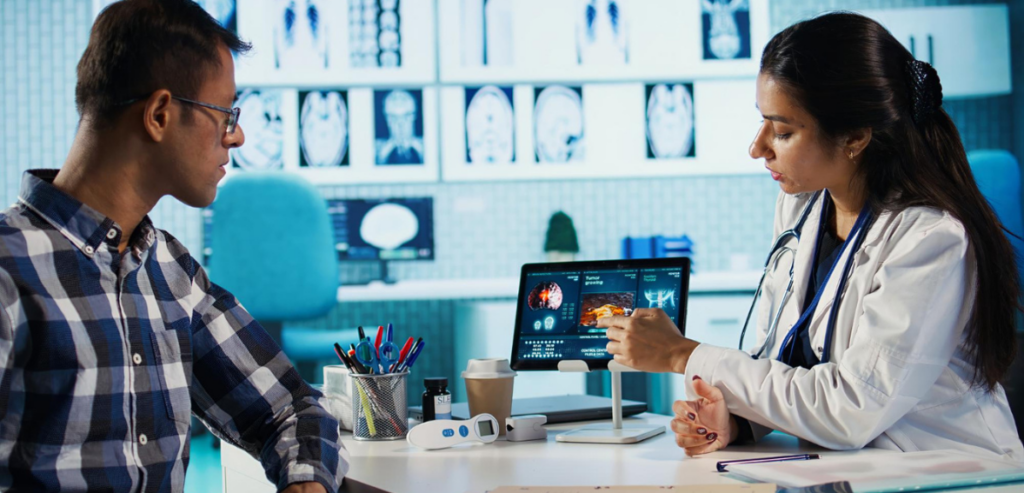
Patient education videos may help inform patients about various diagnostic procedures, surgical preparation, recovery processes, and post-procedure care by showing them on screen.
Hospitals are known to produce videos to inform their patients about admission processes, imaging scans, outpatient surgeries, rehabilitation programs, and other services offered.
Patients often feel less anxious once their expectations are adjusted due to visual aids. Improved preparation helps both patients and caregivers.
Supporting Hospital Branding
Healthcare organizations increasingly recognize that communication influences public perception. Hospitals compete not only on clinical excellence but also on patient experience, accessibility, and community engagement.
Hospital marketing trends increasingly emphasize authentic storytelling rather than traditional advertising. Videos showcasing healthcare professionals, community programmes, patient success stories, advanced technology, and organizational values help communicate institutional identity.
These videos allow hospitals to demonstrate expertise while highlighting compassionate care and organizational culture.
Healthcare video marketing therefore supports both educational objectives and broader brand development.
Patients often develop stronger confidence in organizations that communicate openly and consistently.
Improving Communication Across Multiple Platforms
Today, communication in healthcare organizations is done via websites, social media, email news, patient portals, and online advertisements at once.
The use of videos works great in such an environment since the same material can usually be used on different platforms. An educational presentation may be cut into several social media videos to complement the website and the patient education materials.
Trends in hospital marketing more and more focus on the integrated approach to communications, which means using videos as a complement to written materials, but not as a substitute.
Consistent messages on different platforms help improve communication and content efficiency. The content is adapted properly to different platforms.
Maintaining Accuracy and Ethical Standards
Healthcare communication carries greater responsibility than many other industries because inaccurate information may affect patient decisions and health outcomes.
Every healthcare video marketing initiative should prioritize evidence-based information, appropriate medical review, and ethical communication practices.
Videos should clearly distinguish between general educational information and personalized medical advice. They should avoid unrealistic promises, misleading claims, or exaggerated treatment outcomes.
Doctor video content should also respect patient confidentiality and maintain professional standards at all times.
Responsible communication protects both patients and healthcare organizations while strengthening public trust.

Challenges Healthcare Organizations Should Consider
Although video offers significant advantages, successful implementation requires thoughtful planning. Producing high-quality educational content involves scripting, filming, editing, medical review, accessibility considerations, and ongoing updates.
Healthcare organizations must also ensure that information remains current as medical guidelines evolve. Outdated educational content may create confusion if not reviewed periodically.
Patient education videos should accommodate diverse audiences by using clear language, readable graphics, subtitles where appropriate, and inclusive communication styles.
Organizations should also monitor audience feedback to identify opportunities for improving future content.
Careful planning helps maximize educational effectiveness while maintaining professional credibility.
The Future of Video in Healthcare Communication
Technology will continue expanding opportunities for healthcare communication through video. AI, interactive educational tools, virtual consultations, augmented reality, and personalized digital experiences are likely to become increasingly common.
Healthcare reels strategy may continue evolving as platforms introduce new content formats and interactive features. At the same time, longer educational videos will remain valuable for more detailed patient learning.
Hospital marketing trends suggest that transparency, authenticity, and educational value will remain central to successful healthcare communication regardless of technological advances.
Organizations that prioritize patient understanding rather than promotional messaging will likely build stronger long-term relationships with their communities.
Video will continue serving as an important bridge between healthcare professionals and patients.
Conclusion
Healthcare communication is evolving alongside changing patient expectations and digital technology. As more people seek healthcare information online, video has become one of the most effective ways to educate, inform, and build trust.
Healthcare video marketing allows organizations to explain complex medical topics more clearly while creating stronger human connections through authentic communication. Doctor video content introduces healthcare professionals in approachable ways, helping patients feel more comfortable before consultations.
Patient education videos improve understanding, encourage preventive healthcare, and support informed decision-making, while thoughtful healthcare reels strategy expands educational reach across modern digital platforms. At the same time, hospital marketing trends increasingly demonstrate that meaningful communication is about building trust rather than simply promoting services.
When created responsibly, video becomes much more than a marketing tool. It becomes an educational resource that strengthens patient relationships, improves healthcare literacy, and supports better communication between healthcare providers and the communities they serve. As digital engagement continues growing, video will remain an increasingly valuable part of modern healthcare communication.